








How Story of Prague was created: Five years of work and 800 years of history
Today, visitors to Story of Prague walk through three floors, 19 themed rooms and around 800 years of Prague history in a single visit. But behind the finished experience is a story that began long before the museum officially opened in May 2024. And perhaps surprisingly, it did not begin with the idea of creating a museum about Prague.
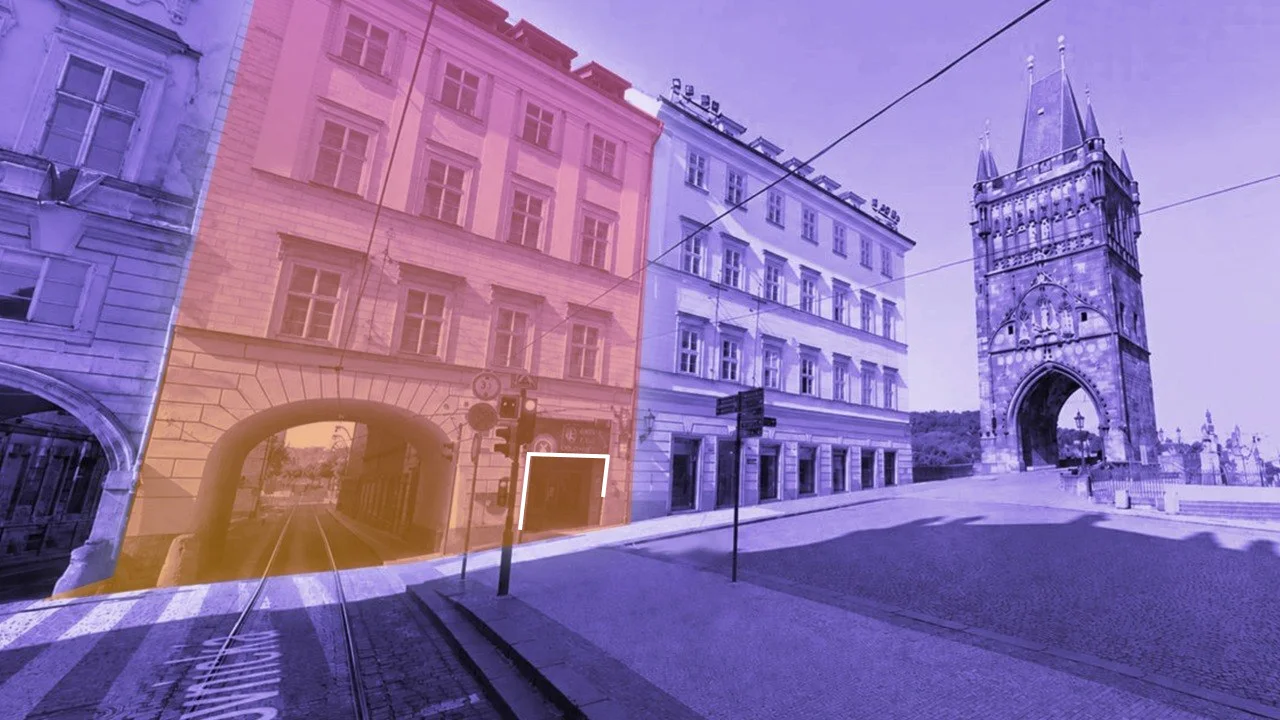
It began with a building on Křížovnické Square.
First came the space. Then came the idea.
When we took over the building just a few steps from Charles Bridge at the beginning of 2020, we did not already have a finished concept looking for the right location. It was the exact opposite. We had an exceptional space in one of the most visited parts of Prague and began asking ourselves what could truly belong there.
At first, we considered creating a project dedicated to the Czech Republic as a whole. Gradually, however, one thing became clear: most international visitors come first and foremost for Prague, and the story of the city itself is rich enough to fill far more than a single museum.
That led to the idea of creating a place that would feel different from a traditional historical exhibition. We did not want visitors to simply walk past display cases and read long panels of text. We wanted them to step into the story, to see it, hear it and experience it. The aim was to help people understand what Prague has lived through over the centuries, while also inspiring them to continue exploring those stories outside in the real city.
And it is difficult to imagine a better location for that idea. When visitors leave Story of Prague, Charles Bridge, the Old Town and Prague Castle are all right in front of them. The history they have just discovered inside continues almost immediately beyond the museum doors.
From Prague AR Museum to Story of Prague
The museum visitors see today did not appear overnight. The entire project took around five years to develop, and the concept changed significantly along the way.
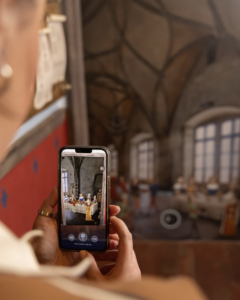
In the early stages, augmented reality was meant to play an even bigger role. The idea was partly inspired by previous experience with the Apple Museum in Prague. There, exhibits could come to life through iPads. A similar approach became one of the foundations of the new project. Its original working name was even Prague AR Museum — Augmented Reality Museum.
During the trial operation in 2023, the name Story of Prague began to be used instead. It quickly became clear that it suited the concept much better. The museum was never meant to rely on a single technology. It was meant to tell the story of a city in many different ways. The name stayed.
How do you fit 800 years of history into 19 rooms?
One of the hardest questions during the entire project was not what to include, but what to leave out.
Prague offers an almost endless number of historical events, personalities, legends and smaller stories. Together with historians and researchers, we built up a collection of roughly a thousand interesting facts and stories before gradually reducing them to the strongest ones.
The result is 19 rooms, each with its own theme, period and atmosphere. Visitors do not move through a series of identical exhibition spaces. Instead, each room opens a different world. One moment they are surrounded by the mysterious atmosphere of Rudolf II’s Prague and alchemy, and later they find themselves immersed in the story of Operation Anthropoid or communist-era Czechoslovakia.
The information on the walls is deliberately kept short. Rather than overwhelming visitors with long texts, we wanted to focus on memorable details and stories that spark curiosity. Those who want to go deeper can continue through around 300 QR codes placed throughout the exhibition.
Finding the right balance between historical accuracy and entertainment became one of the biggest challenges of the whole project. The goal was never to show absolutely everything. It was to choose the moments that could create a clear, engaging and memorable story of Prague within roughly an hour to an hour and a half.
More than 100 people helped create Story of Prague
A project like this cannot be created by a historian, an architect or a set designer alone. Over five years, Story of Prague became the work of more than 100 people from many different fields.
Historians and researchers worked alongside copywriters, artists, painters and sculptors. The team also included filmmakers, set dressers, technicians, audiovisual specialists and app developers. Some parts of the exhibition required specialist advisers as well. For example, the section on Prague’s Astronomical Clock was created with expert input from someone who has worked with the real clock for many years.
Many props were not simply ordered from a catalogue. Authentic and atmospheric objects were collected over several years. The team searched flea markets, second-hand shops and other places where something with the right character might unexpectedly appear.
The final result combines history, film, scenography, technology and storytelling. Every element has to work together. A room cannot simply look good. It also matters what visitors notice first. The team thinks about where their attention moves next and what they hear. Each part of the experience must also connect naturally with the following chapter.
When you need to get a Škoda into the second floor
Five years of development naturally brought plenty of complications. Some were creative, some technical, and a few felt almost like scenes from a film.
One of the biggest practical challenges was getting a Škoda car into the second floor of the building. Cutting it into pieces and rebuilding it inside was not the preferred option, so a crane was brought in instead. The car was eventually lifted through a window, and at one point the entire operation became considerably more dramatic than anyone had planned.
There were also moments when almost finished ideas had to be abandoned. A 360-degree VR experience had been developed for several months for the room devoted to communism, but it ultimately could not be used. The entire section had to be reconsidered and rebuilt in a different way.
At the same time, electronics, mechanical elements, digital content, the mobile application and the audio guide all had to work together seamlessly. The visitor should never have to think about any of this technology. Ideally, they should simply be able to follow the story.
History that does not belong behind glass
From the beginning, we knew we did not want to create a museum where people slowly walk past display cases while trying to read as much text as possible. Story of Prague is built around the idea of edutainment — combining education with entertainment.
When a historical story has atmosphere, emotion and the right pace, people often remember far more than they would from several pages of a textbook. That is why the rooms use scenography, audiovisual content, augmented reality, photo points, sound and other interactive elements to bring visitors closer to a particular period.
Technology is never meant to be there simply for its own sake. Its role is to support the story. At times, visitors should feel less as though they are walking through a museum and more as though they have stepped inside a film.
From Rudolf II’s Alchemists to Operation Anthropoid
Each of the 19 rooms has its own character. Some, however, have become personal favourites of the creative team.
One of them is the room devoted to Rudolf II. It is inspired by Renaissance Prague, alchemy and the emperor’s mysterious court. The theme also has a personal connection to the project’s chief curator. He previously created the historical escape game Elixir Mystery in real 16th-century cellars near Charles Bridge.
A very different atmosphere can be found in the room dedicated to Operation Anthropoid and the year 1942. Here, the storytelling becomes darker and more intense. The aim is not only to explain what happened. It is also to bring visitors closer to the tension and seriousness of the events that unfolded in Prague during the Second World War.
This contrast between different worlds is an important part of Story of Prague. Prague has never had just one face. Its history cannot be told in only one style.
And then came May 2024
After years of planning, research, construction, changes and testing, the time finally came to introduce Story of Prague to the public.
The grand opening in May 2024 was never meant to feel like a traditional museum opening with a few speeches and a glass of champagne. If Story of Prague was supposed to be an immersive experience, its opening had to have the same energy.
Actors brought different parts of the exhibition to life throughout the building, Andrea Kalousová performed on the third floor, and the evening was hosted by Jakub Kohák. The museum was then symbolically “christened” in a slightly unconventional way: instead of cutting a ribbon, a cake was cut with a sword.
With a DJ, bar, photographers and camera crews, the evening became both the end of a long development process and the beginning of Story of Prague’s next chapter.
Story of Prague does not end at the exit
One of the most important ideas behind Story of Prague is that the experience should not end when visitors leave the final room.
The museum is meant to work as an introduction to Prague and an invitation to continue exploring the city. Over three floors, visitors discover the main themes of Prague’s history, while the app allows those stories to continue outside. Places mentioned in the museum can be found on a map, making it possible to visit them in the real city afterwards.
And perhaps that is the simplest answer to the question of why Story of Prague was created.
We never wanted to tell visitors absolutely everything about Prague, because that would be impossible in a single visit. Instead, the aim was to show some of its strongest stories, awaken curiosity and help people look at the city with slightly different eyes.
Because when you step back outside onto Křížovnické Square, Prague is no longer just a beautiful backdrop surrounding Charles Bridge. It becomes a city full of stories that you have only just begun to discover.